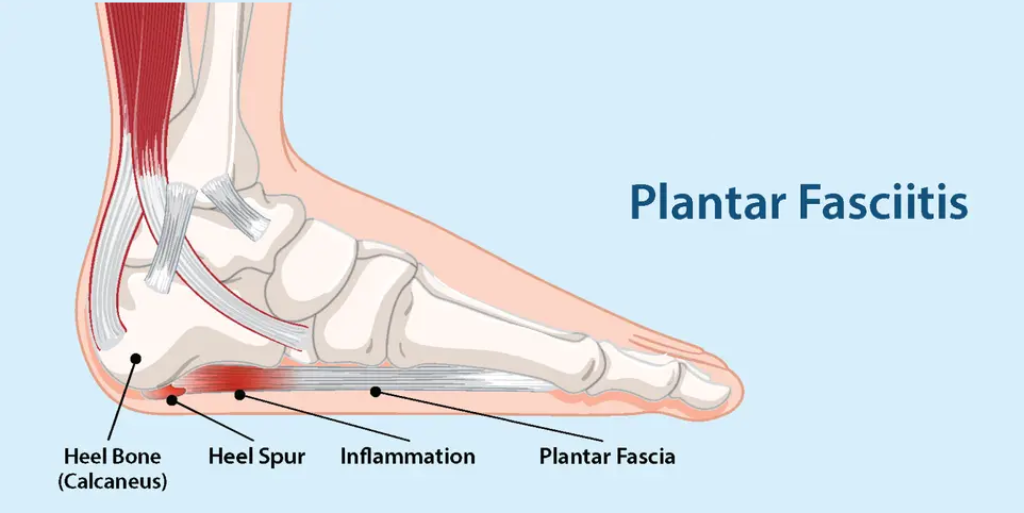
Plantar fasciitis is one of the most common causes of heel pain, affecting people of all ages, from runners and athletes to those who spend long hours on their feet. At Lake Pointe Orthopaedics & Sports Medicine, we regularly treat this condition and help patients return to comfortable, active lifestyles.
If you’ve noticed sharp pain in your heel when you get out of bed or after sitting for long periods, plantar fasciitis may be the reason. Here’s what you should know.
What Is Plantar Fasciitis?
The plantar fascia is a thick band of tissue that runs along the bottom of your foot, connecting your heel to your toes. Its job is to support the arch and absorb shock with each step. Plantar fasciitis occurs when this tissue becomes irritated or inflamed. Over time, tiny microtears can develop, leading to persistent pain, stiffness, or aching in the heel.
Common Causes
Several factors can increase your risk of developing plantar fasciitis, including:
- Overuse or high-impact activity (running, jumping sports)
- Flat feet or high arches
- Tight calf muscles or Achilles tendon
- Improper footwear that lacks arch support
- Prolonged standing or walking
- Aching, burning, or tingling sensations on the bottom of the foot
- Weight gain, which adds stress to the heel and arch
Typical Symptoms
Most people experience:
- Sharp heel pain, especially with the first steps in the morning
- Pain after long periods of rest
- Pain that worsens after activity, not usually during it
- Tenderness along the bottom of the heel
- Tightness in the arch or calf muscles
- Occasional numbness, tingling, or a “pins and needles” sensation along the bottom of the foot, sometimes more noticeable at night or after lying down
Symptoms often appear gradually but can become more severe if left untreated
Home Treatments That Help
Many cases of plantar fasciitis improve with conservative care. Common treatments include:
1. Rest & Activity Modification
Avoid repetitive high-impact activities until pain decreases
2. Ice Therapy
Applying ice for 15–20 minutes helps reduce inflammation.
3. Stretching Exercises
Calf stretches, plantar fascia stretches, and rolling your foot over a frozen water bottle can improve flexibility and relieve tension.
4. Supportive Footwear
Shoes with good arch support and cushioning can reduce strain on the plantar fascia.
5. Orthotics or Inserts
Over-the-counter or custom orthotics help support the arch and redistribute pressure.
6. Physical Therapy
Targeted exercises can strengthen supporting muscles, improve mobility, and speed recovery.
Advanced Treatment Options
If symptoms persist despite home care, more specialized treatments may be recommended, such as:
- Steroid injections
- Night splints to stretch the plantar fascia overnight
- Custom orthotics for long-term support
In rare cases, surgery may be considered when conservative methods do not provide relief.
When to See a Doctor
While mild heel pain can often improve on its own, it’s important to seek medical evaluation if:
- Pain lasts more than a few weeks
- You have severe or worsening heel pain
- Walking becomes difficult or painful
- You suspect a heel fracture or other injury
- Home treatments aren’t helping
- You have swelling, numbness, or tingling in the foot
- Pain is affecting your daily activities or sleep
Our orthopedic specialists at Lake Pointe Orthopaedics & Sports Medicine can provide an accurate diagnosis and personalized treatment plan to help you feel better faster.
***
To explore more ways to manage or treat your foot pain